

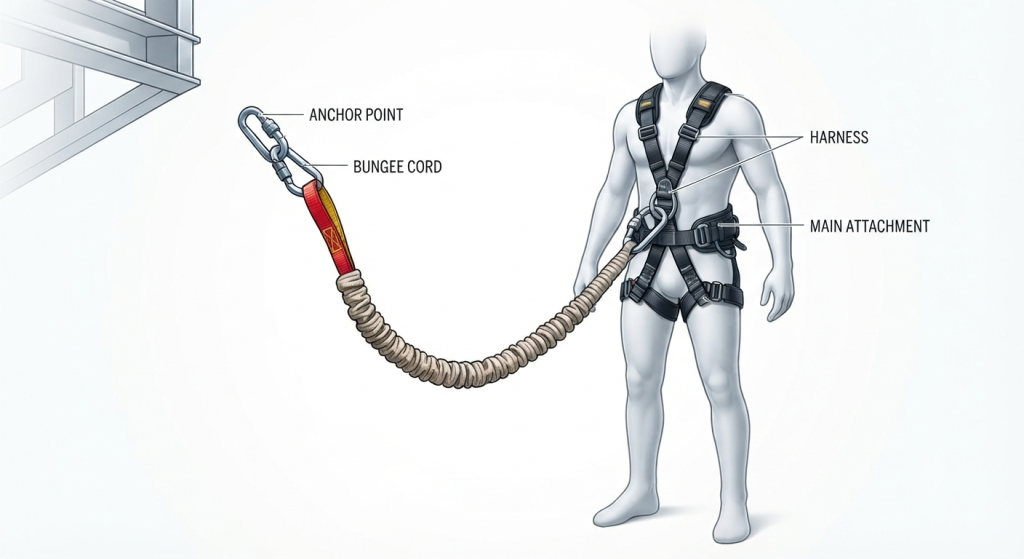
Before anyone leaps off an 83-metre platform, one question matters more than any other: “What exactly is holding me?” The answer is a carefully designed chain of equipment. Understanding it makes bungee jumping feel less like a gamble and more like engineering.
The Big Idea
A bungee jump works because of one property: elasticity. The cord stretches under your weight, absorbs the energy of the fall and then pulls you back up. Every other piece of kit exists to hold you securely to that cord, and to back it up if anything fails.
The Bungee Cord
The cord is made of many strands of high-grade latex rubber bundled together inside a protective cover. It’s not a single thick rope. That multi-strand design adds strength and means no single strand carries the full load.
Cords are chosen according to your weight. A heavier jumper needs a firmer cord, and a lighter jumper needs a softer one. That is why you’re weighed before the jump. Cords are also tracked by use, and reputable operators retire them after a set number of jumps, even when they still look fine.
The Harness
Two harness types are common:
- Ankle harness: padded wraps around the ankles, connected to the cord. This gives the classic upside-down feel.
- Body harness: a full harness around the waist and legs, sometimes used together with the ankle setup for extra security.
Many professional setups combine both, so you’re attached at more than one point. Harnesses use thick, padded webbing designed to spread the pull over a larger area, which keeps the rebound comfortable.
Carabiners and Connectors
Locking carabiners join the harness to the cord. They’re made of strong metal, and each one has a locking gate that doesn’t open by accident. Crew members check that these gates are fully closed before every single jump.
The Backup System
This is the part that matters most. A good setup never relies on one connection. A secondary safety line or backup attachment is in place, so if the main system had an issue, a second one would still hold you. Redundancy is the heart of jump safety.
Platform and Anchoring
The cord attaches to a fixed anchor point on the platform, built to carry far more than any jumper’s weight. At India’s highest bungee jumping site, this structure is inspected regularly, and wear is checked before the day’s jumps begin.
How the Fall Feels
The Rishikesh bungee jumping height gives you a long, thrilling free fall before the cord engages. Then it stretches gradually, which prevents a harsh jerk. After the first big stretch, you rebound upward, then fall again with smaller bounces until the energy fades.
Inspections Before Every Jump
Responsible operators follow a routine:
- Daily check of cords, harnesses and hardware
- Weight check for every jumper
- Double-check of harness fit and carabiner locks
- Final verbal confirmation before the jump
If any part looks worn, it’s taken out of use.
What You Should Look For as a Customer
Whether you’re booking bungee jumping in India or abroad, ask:
- Is the equipment certified?
- How often are cords replaced?
- Is there a backup system?
- Are crew members trained and experienced?
A professional team will answer these questions confidently. Safety is also part of why the bungee jumping rishikesh cost differs between operators: good gear and trained staff cost money.
Why Trust Matters
Fear of the jump is natural. But when you see the checks, the redundancy and the crew’s calm routine, that fear becomes excitement. You’re not just jumping; you’re relying on a system designed so that many things would have to go wrong before anything could.